

Why We Find It Hard to Do Things That Are Good for Us

Editor’s Note: This is a contribution by Hannah Clare

“Have respect for yourself, and patience and compassion. With these, you can handle anything.” ~Jack Kornfield

I find it hard to do things I know are good for me—harder than anything else in my day-to-day life.

Yoga, meditation, journaling: these have all been invaluable tools during my personal journey, yet I have to will—sometimes fight—myself in order to do them.

It’s not that the activities themselves are hard (although yoga can be intense). It’s the motivation—the internal debate that starts up every day—that I struggle with. Afterwards, I feel great: more in touch with myself and far more at peace. But to get there, it’s a psychological mission.

I used to think it was just me—that everyone else sat down to these activities with an eager mind and an open heart, especially people who write about these things, like I do, and practice them daily, like I want to.

The fact that I was less skipping joyfully to and from these activities, and more dragging myself with gritted teeth left me feeling like a fraud, which meant I wanted to do these things even less.

Over time, I learned more about self-acceptance. I learned to accept that this was me, the way I am, and that perhaps I will always find it difficult to sit down and do these things, whether it makes sense or not. Yet, I still felt alone with my struggles and, therefore, afraid to really talk about them with anyone else.

Last week, I was talking to a friend of mine about challenges he was having with a course I run. He was saying he felt resistance, he didn’t know why, and that it seemed like everyone else found sitting down and doing the work a walk in the park. They could just do it, whereas for him it was a daily battle.

That sounded familiar…

And as soon as I wasn’t trying to hide the resistance, as soon as I let myself talk about it openly, I could think more clearly about why I felt that way, and what was behind that resistance. And out of all those reasons came the realization: the resistance is on my side; sometimes it’s just misguided. Click Here to Read More…

Swapping out your To-Do list for a Be-Now List

Editor’s Note: This is a contribution by Kate Howe

“The grass is not, in fact, always greener on the other side of the fence. Fences have nothing to do with it. The grass is greenest where it is watered. When crossing over fences carry water with you and tend the grass wherever you may be.” ~Robert Fulghum

For as long as I can remember, I have been an ardent keeper of a life to-do list. Always a set of invisible criteria in my head, and sometimes written-out in actual lists, my to-do list of life improvements has been sort of a North Star, guiding my direction and efforts.

This love of improvements in process stems from a longstanding and deep desire to be transformed in some magical way. Not because my life has ever been bad in an objective sense, but nevertheless, I always believed my life—and I—needed to be changed and improved.

In elementary school, for example, I can remember thinking ahead to a trip I was going to take in the summer with my friend’s family to Cape Cod.

I planned all the ways I’d use the following months to become the pretty wasp-y girl who I thought belonged on Cape Cod (grow out my hair, get a new cover for Bermuda bag…)

Or, when I went off to college in New York City, I looked forward to the very sophisticated, adventurous urbanite I would be (stop eating dinner between now and then to be skinny, buy this pair of boots and that jacket, develop an air of nonchalant cool…)

This was a pattern I replayed many times over: set my sights on a media-perfected image of a lifestyle or type of person, and then list all the ways that I needed to change to become more like that image.

All of these different factors would find their ways into resolution or to-do form. (Will lose weight, will be more extroverted and charming, will learn to be a better flirt, and so on.)

When the experiences I planned for came to pass, they each had their own reality, which was good, interesting, and full in its own way. Click Here to Read More…

How to Tackle Resistance to Make Meaningful Life Changes

Editor’s Note: This is a contribution by Angela Marchesani

“Kites rise highest against the wind, not with it.” ~Winston Churchill

A little over two years ago, in December of 2009, I wrote these hopeless words in my journal:

“All around me, I’m noticing people perpetuate patterns they claim to hate or end up in situations they’ve always dreaded. And I can’t seem to break free. When I take steps to make a new life or forge a new path, barriers pop up left and right. I don’t know what to do differently.”

At the time, it felt as if my repeated attempts at changing the trajectory of my life toward joy and expansion were constantly thwarted by some covert forces intent on keeping me down.

I felt as if I was fated to feel unfulfilled and discontent for the rest of my life. I felt like maybe everyone was fated to repeat maladaptive patterns and self-sabotaging mistakes.

My, how things have changed.

Since then, I’ve taken significant steps toward major changes in my life, all bringing me closer to a joyful life based on my “anchors,” or values. My life continues to open up and I am presented with new opportunities daily.

But there is still resistance. Nay-sayers. Obstacles to this change that I previously thought were unmanageable. In the past when these obstacles came up, I would shrink back into my old life thinking, “I knew I couldn’t do that.”

In the present, I harness all of my strength and resources and confront these obstacles head-on. I know that there will always be resistance to change. But that doesn’t mean it’s not worthwhile.

I’ve identified the two primary barriers to change, and some strategies for managing both.

Read on to begin charting a new course for your life. Click Here to Read More…

Are You Waiting for Your Life to Start?

Editor’s Note: This blog post was submitted anonymously

“There are two primary choices in life: to accept conditions as they exist, or accept responsibility for changing them.” ~Denis Waitley

Even though I am just 20, I’ve always been one of those people who is constantly waiting for my life to start. “When I’m older I’ll do this” and “In a few years I’ll do that.”

My Dad took his own life when I was very young. Due to my age and the fact my family struggled so much with the loss, I grew up thinking he died of natural causes and learned the truth by accident when I was a teenager.

At the time I told one friend, who was my age. In hindsight she was too young take on my burdens as well as her own, and I was too young to know how to handle finding something like this out. The way I viewed my family, my Dad, and myself completely changed.

For a few years I dealt with it very destructively.

I couldn’t make sense of all these new feelings I was experiencing and constantly viewed myself as worthless and unattractive; in my head I must have been if my own Dad could leave me like that.

I suffered with depression and an eating disorder that would continue for a long time.

A lot of my friends never knew about the way I felt. I was always “the funny one” and became loud and overconfident to mask what I was actually feeling. Food became comfort for me, and always in the privacy of my own room.

High school soon ended, and I welcomed that with open arms. I saw the next stage in my education as a new beginning. I loved my friends with all my heart, but I thought a change of scenery and a chance to meet new people would help me change the way I looked at myself and my issues.

But nothing really changed.

I met some amazing people, discovered my love for music again, and had some wonderful times. But I was still burying issues and hiding behind jokes and overconfidence. Click Here to Read More…

A Small Guide to Big Changes

Editor’s Note: This is a contribution by Jeff Munn

“It is better to take many small steps in the right direction than to make a great leap forward only to stumble backward.” ~Proverb

I recently made a discovery that massively increased the amount of change that I have been able to take on. Good stuff, too, like my eating habits and the amount that I exercise.

By this time last year, and the year before, I would have already dropped my New Year’s resolution. Maybe you have, too.

But there’s still a chance. There’s still time for some big changes this year.

With this small change, I’ve not only taking on big changes, but I’ve been able to sustain them. And add to them.

I’ve deepened my meditation practice. I’ve lost weight. I’ve reduced the amount of sugar I eat. I’ve dropped caffeine. I’ve increased the amount of yoga I do. I’ve started running again. And writing.

This has all happened since adopting one small trick that I had never heard about (and that frankly, I had never even read about).

It’s made change fun.

Here it is:

Start as small as you can. And do that small thing every day.

If I could see your face right now, chances are pretty good that I would see someone who looks a bit underwhelmed. Click Here to Read More…

Life Is the Result of Your Beliefs and Expectations

Editor’s Note: This is a contribution by Sheila Viers

“The outer conditions of a person’s life will always be found to reflect their inner beliefs.” ~James Allen

Just because you’ve believed something is true, even if you’ve believed it for a long period of time, that doesn’t mean that it is actually true or that it has to be true for the future.

For a long time I believed that my body was broken. I believed that I could never be super lean and ripped even though I really wanted to be. I also believed I had irreversible digestive issues that seemed to be getting worse and worse.

I spent a lot of time searching for answers because I believed that somebody out there somewhere had to have the cure to fix me.

Somebody had to know how to help me finally lose weight and gain the body of my dreams, the happiness I longed for, and the approval I so much needed but would never admit.

I bounced from one diet or self-help book to the next, reading one magazine after the other, Googling one “how to fix {insert ailment}” search topic after another, hunting for the key.

But then somewhere along the way I realized I didn’t want to do that anymore. I was tired of feeling broken, helpless, and sad. I started to question why I kept doing what I was doing.

It started to seem really silly to me because I wasn’t actually finding any of the answers I was seeking. In fact, I seemed to be just getting more confused than ever. I stopped searching for how to fix myself, and instead began searching for the answer to a different question:

Why do I feel so broken?

Shifting my question led me on a whole new adventure where I finally recognized I wasn’t broken at all; in fact my body had the ability to regain its balance on its own, which it did. The problem wasn’t my body, it was my beliefs—my limiting, disempowering beliefs. Click Here to Read More…

The Fear of Change or the Thrill of Something New?

Editor’s Note: This is a contribution by Adam Alvarado

“Man cannot discover new oceans unless he has the courage to lose sight of the shore.” ~Andre Gide

I’ve lived in Virginia all my life. Pretty much all that I remember at least.

I was a young boy when my parents moved here from Long Island, New York—away from much of our family—because life in the place they had grown up just didn’t provide the opportunities necessary to support a family of six.

Since then, nearly my entire extended family has followed—most of my aunts and uncles, and their children, and their children. And though they may live in Virginia, these older family members remain New Yorkers.

You hear it in their voices, in their attitudes. You see it in the Yankee hats and the Giants jerseys.  They’re so “New York” in fact, that I often jokingly call them Virginian just to watch the comically disgusted looks on their faces.

I’m evil. I know…

And though I myself go back to New York all the time and do enjoy it, I’m just not one of them.

I am not a New Yorker. And though my family may secretly cringe at the thought, it’s true.

I love Virginia. I love it.

I think it’s the most beautiful place. I love all the hills, and the creeks, and the forests. I love how I’m a short drive from bustling young cities around DC and rustic old farms down south. I love how nearly every road has a sign marking some long-forgotten event of the Civil War.

I love the old split-rail fences that frame the historic houses. I love imagining that these forests were once walked by Indians and settlers, Confederates and Unionists.

I was educated here at a university founded by Thomas Jefferson. I graduated on the lawn where he once walked. I lived there on land that was once owned and farmed by James Madison.

This place is so perfect to me, and I love it.

So, Long Island?

Yeesh.

It’s just some place to me—known more in my memory for the countless old car dealerships, and the endless delis, and the fact that no matter how long it’s been since I’ve been there last, it never seems to change at all, as if it’s perpetually 1985.

It’s like people never move there. They only ever move out. Click Here to Read More…

How to Create Your Ideal Day in Work and Play

Editor’s Note: This is a contribution by Danielle Nelson

 “Every new day is another chance to change your life” ~Unknown

Take a moment to imagine it: your ideal day. At work or at play. Big events or routine tasks.

Imagine how you’d feel as you yawn, stretch, and step out of bed. What your first action would be. Your second.

What you’d eat, what you’d do, and how you’d spend your time. The lightness of happiness as you ease (or not, if that’s your pleasure) from one activity to the next. Your ideal day, start to finish.

Just imagine.

Picturing your ideal day is a common exercise that I use with my clients. It’s clarification visualization, a way to hone in on what you’re really after in your professional and personal life.

Last week, while working my way through an e-course to help bring focus into my business and life, I found myself on the other end of that exercise: writing out my ideal day.

On my ideal day, I woke up well-rested. After my morning exercise and shower, I sat down with a tasty beverage, reviewed my planner for the day ahead, and felt excited about what I had on my plate.

My tasks were spread throughout the day with plenty of space in between—an element missing from my current, “non-ideal” life—and there was time for creativity, reading, and “magical content creation.” This is how I reframed writing, a task I struggle with, suggesting that the words would come easily.

The day would lead to a dinner created by my own hand from fresh, local ingredients, and it would also include plenty of sunshine, fresh air, and nature’s beauty. It would conclude with a good night’s sleep to start the process all over again. My ideal day was about space, self-care, balance, and excitement.

But I didn’t just write about it. I thought about it. And then, most importantly, I let myself have it.

After I completed the exercise, I set out to incorporate just one thing—one feeling—into my “normal” everyday life. I chose space, because it was a predominant theme for me and the thing I felt the most drawn to.

Everything in my current world had felt very crammed together—work, friends, family, downtime; it all felt rushed. Deep inside, I craved breathing room.

When I sat down to incorporate space into my schedule, I was surprised at what I found: that I had the “room” to incorporate so much of my ideal day into my life right now. Not the sunshine, of course—I can’t control the weather—but I could have not just space, but balance, self-care, and excitement, too.

Not five years from now, or even two—right now.

It might seem impossible, but whether your ideal day involves a tropical beach, margaritas, and courteous and attentive staff, spending more time with your kids, or writing a novel, it can be done! Step by step, little by little, you can get there.

Here’s are some steps that are helping me do it: Click Here to Read More…

When You Keep Learning Instead of Taking Action

Editor’s Note: This is a contribution by Alexander Heyne

“Begin, be bold, and venture to be wise.” ~Horace 

It was day five without food, meditating in a cave in the Sahara desert.

In 2009, I skipped out on two weeks of my senior year of college to go to the desert.

Ever since I was a young I had been into exploring the boundaries of the self. I had always wanted a period of time when I could totally be alone for days—not a word spoken to me, where I could go deeper into my mind than ever before until I simply evaporated.

So there I was.

Just the desert sands, the sky, and me.

And I was bored.

The mind-bending impenetrable boredom was the first thing that hit me. Hard.

And I’m not one of those people who is constantly multitasking. You can put me in a room for 3 hours and tell me to do something quietly and I’ll come out fine, sanity-intact.

However there was something so stubborn about this boredom. I was wondering if perhaps I should’ve just gone back to my daily meditation routine instead of flying all the way into the Sahara desert.

The days eventually passed, the sun rose and set like it should, and every once in a while I had little visitors stop by.

A dragonfly.

I thought that was a little weird, since I knew dragonflies don’t go far from water.

Two dragonflies. Hmm.

Five dragonflies.

A cloud of dragonflies flying in formation. That was pretty bizarre, I thought.

As the days wore on, I started experiencing the subtle effects of hunger. Pain and nausea wore off after day 1—and afterwards I just experienced weakness from the lack of food. Click Here to Read More…

It’s Time to Make a Change: If Not Now, When?

Editor’s Note: This is a contribution by Laura Fenamore

“What you are is what you have been. What you’ll be is what you do now.”  ~Buddha

These words resonate for me in a deeply personal way. The importance of being in the here and now, of recognizing that every moment is an opportunity to wake up to what is happening and what is possible, saved my life.

I was a compulsive eater out of my mother’s womb. The youngest of eight children in an abusive home, and I used food to feel safe. I overate every day, hated myself for it, and yet could not stop.

I started addicted to food, and by my teenage years I was addicted to alcohol and drugs, as well. By age 24, I was designing my ending and talked regularly about taking my life. I was a fat, depressed drunk who hated herself, until a major shift happened.

I had recognized my self-harming behavior and had been in Overeaters Anonymous (OA) for months, but my patterns were the same. After meetings, I would go straight to the grocery store and then binge my brains out in the car, thinking, “Well, I’m not ready yet, and I am doing the best I can right now.”

Part of me was seeking something better, and the other part was desperate; one part wanted to live, and the other did not, but still I hung on to the belief that something might change.

Then came the day when I heard four words that rocked my world forever.

It was February, 1988. My latest New Year’s resolution to heal had died, and I was using food like crazy and drinking like a fish. There was a daylong OA conference, and as disappointed as I was in myself yet again, I knew I needed to go.

The very first speaker, a normal-sized woman, had a story similar to mine—a lifetime of yo-yo diets and self-hate. She talked about feeling desperate and determined at the same time, of living her life in two parts: the one who knew there was more, and the one who felt defeated.

She talked about all of her excuses and stories and lies and self-betrayals, and how they were digging her grave deeper.

She, like me, had wanted out of the quicksand, and could never find a hand or a rod or anything to pull her out. Then, one day in a meeting, she had heard a woman share a similar story of attempts to save herself until her life was changed by four words. Those words would forever change the life of this woman and, as soon as she shared them, they changed mine too.

“If not now, when?”

When she shared those words, I burst into tears and experienced an actual physical release in my body, an earthquake in my cells. My world was literally rocked and my life forever changed. Just then, I got it. Click Here to Read More…

Difficult Lessons: How to Learn What You Need to and Move On

Editor’s Note: This is a contribution by Fiona Robyn

“Nothing ever goes away until it has taught us what we need to know.” ~Pema Chodron

I’ve been self-employed for many years now. This is no accident. I’ve always liked to do things my own way. I like to arrange my diary in exactly the way I want to, and make my own mind up about how I do things. I like to work without having to justify anything to a manager.

I’m not always comfortable in working relationships where the other person is “higher up” than me—when they’re in authority. You could say that I’m a teensy bit of a control-freak.

I used to work for a big corporation, and my relationships with my managers weren’t always easy. I was very critical of the way they did things, and if they criticized me I sometimes got very defensive. I learned a great deal from a couple of good managers, but I also spent a lot of time resenting being “told what to do.”

Recently, I decided to embark upon training to become a Buddhist minister. This involves having a “supervisor” who is responsible for my spiritual training, and who will ultimately be responsible for deciding whether or not I “make the grade” and ordain.

Last month, my supervisor asked me a question in an email and I felt immediately attacked and defensive. I felt annoyed. I complained to my friend. I sent her a long and rambling reply, outlining all the reasons why she shouldn’t be asking the question. We exchanged a few emails, and the situation got more and more confused.

I thought I’d managed to avoid conflict with people senior to me when I became self-employed. I didn’t have a manager anymore, so what was the problem?

The problem is that, as Pema Chodron says, nothing ever goes away until it has taught us what we need to know. Click Here to Read More…

Being Patient through Transformation: Trust, Change, Believe

Editor’s Note: This is a contribution by Andrea Johnson

“We are all faced with a series of great opportunities brilliantly disguised as impossible situations.” ~Charles R. Swindoll

Ever noticed a chrysalis hidden within its cocoon? The final few moments before it emerges as a butterfly compose what science terms as metamorphosis, a transformation.

If you have been lucky enough to observe this process, which I highly recommend watching, you’d notice it has to struggle quite a bit before it gets all the attention for being the magnificent creature it is.

It’s long and painful. However watching it, you may be tempted to clip off the outer covering of the chrysalis with a pair of scissors. And you might do it, thinking you’re doing it a favor. But when it finally emerges, you’d be sorely disappointed.

The chrysalis’ covering holds within its shell vital fluids that are important to its wing formation. But your act of kindness, of clipping that outer shell deprives it of that, and as a result, the butterfly that emerges is crippled, deformed, and nothing like the butterfly it was supposed to be.

On the other hand, if you can muster up the patience to watch this metamorphosis take place, without any intervention from your side, you’ll see one of the most beautiful miracles of nature, and one of life’s best lessons.

Our lives are journeys to this same type of metamorphosis, to find a sense of purpose in life. We cannot achieve this without the difficult situations or the pain that life often brings in generous doses.

Each one of us has had to let go of a dream, compromise, and experience pain and the entire gamut of emotions that an undesirable change can bring. But by no means did it ever spell the end of all dreams.

I graduated from law school with big dreams to help the world, to fight for justice, and to make a difference with my education, because I considered myself fortunate to have had an academic training— unlike the millions of other kids who haven’t had a chance to study at all.

I joined the non-profit sector with high hopes and zero expectations of financial rewards, because all I wanted was to make a difference. But life had other plans, as it always does.

Eight months down the line, I quit my job over the lack of work ethics. I couldn’t stand to compromise my principles, or to allow myself to be manipulated for what I held to be good and true. That was the end of a long cherished dream. It was a difficult decision because it certainly didn’t look good on a resume! Click Here to Read More…

4 Simple Mantras to Help You Stay Positive and Happy

Editor’s Note: This is a contribution by Sirena Bernal

“The best place to find a helping hand is at the end of your own arm.” ~Swedish Proverb

Mantra, according to the dictionary:

Any sacred word or syllable used as an object of concentration and embodying some aspect of spiritual power.

Mantra, according to Sirena:

Things I say to myself to help me deal.

There are times we all go through that just straight up suck.

During these times, it can be hard to think about anything other than what’s going on. We can become so consumed in our own misery that we often overshadow any glimmer of hope.

And although these times can seem endless while we’re in them, it’s through these crappy times that we learn the most about ourselves and receive some of life’s greatest rewards.

I can only say this after going through some of my own crappy times. You know, experiencing little things like breaking up from an engagement, being unemployed, questioning my sexuality, severing several friendships, wiping through my entire savings, and accumulating way too much debt.

All within the same year.

Yikes.

Through my own experiences of hopelessness, confusion, and doubt, I’ve learned to establish a few simple, but very effective phrases to help me stay positive and to keep things in perspective.

So now, whenever things cross my path that may initially seem unbearable, or if I begin to doubt myself, I just remember and repeat some of the following mantras: Click Here to Read More…

Renovate Your Life: 5 Key Truths About Creating Change

Editor’s Note: This is a contribution by Karen Mead

“Nothing ever goes away until it has taught us what we need to know.” ~Pema Chodron

We are currently in the midst of home improvement—what we thought would be a small “touch-up.”  Nothing seemed too threatening on the surface, just a scratch here, a nick there. It would be a simple fix.

But when we began the project and uncovered the areas we were going to address, we saw there was much more than met the eye, as often happens in life. We could no longer ignore what we had sealed over and painted, covered with lovely flowers, and ignored for many years.

Isn’t it funny how often plumbing is a perfect analogy for life? Opening what seemed to be a simple clog revealed 45-year-old crumbling pipes, made from materials long obsolete. All of the unseen clogging and rusting seemed symbolic of the hidden parts deep inside myself.

When I acknowledged a simple issue—my fear of change—it revealed old beliefs that no longer serve me. Beliefs that were behaving just like our pipes by creating major blocks. Beliefs that I had covered so well with personal landscaping that no one (including me) saw them.

The most amazing thing was sharing this with a plumber who really got it and shared my insights.

Who knew—enlightenment through our sewer drains!

So as the project moves on, I want to share five of the truths about home and self improvement that I have discovered thus far: Click Here to Read More…

How to Change Your Mind and Your Life by Using Affirmations

Editor’s Note: This is a contribution by Kathryn Britt

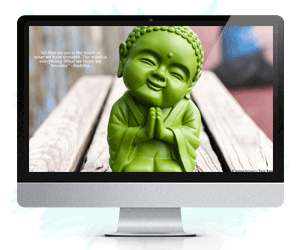
“All that we are is the result of what we have thought. The mind is everything. What we think we become.” ~Buddha

I used to teach Adult Upgrading. My students were people who had never completed grade school and/or high school. For a variety of reasons, they were now ready to try it again.

New students would say, “I wasn’t ever any good at school.” “I can’t do math.” “I hate fractions.”

It’s my belief that our self-talk is programming ourselves for our statements to be true.

Those students thought they’d been stating the facts, not revealing programmed beliefs.

My work was less about teaching math than it was about coaching them toward a change in their beliefs about themselves.

“I never again want to hear you say you’re not good at math,” I’d say. I’d ask them to switch to “I’m learning math” or “I’m getting better at math” or “I’m working on fractions.”

I’d help them start to notice their own negative self-talk and then transform it into positive statements. “Sure it sounds weird. So humor me,” I’d have to say. “Yes, I know it doesn’t feel like it’s true. Not yet, anyway.” They’d roll their eyes at me.

I’ve read that schools teach fractions before many of our brains are developmentally ready to cope at that conceptual level. I believe this, because I’ve met so many people whose problems in school began around the time fractions were introduced.

Children’s developing self-images are vulnerable. Once children begin to feel stupid about a school subject, the negative self-talk begins. It soon defeats their egos along with their will to learn. Click Here to Read More…

How Losing Everything Can Give You Even More

Editor’s Note: This is a contribution by Jennifer Wright

“The real measure of your wealth is how much you’d be worth if you lost all your money.” ~Unknown

My parents passed down their values which I imagine is the same for a lot of parents who are fighting the good fight for their kids.

They taught me that material possessions weren’t going to make me happy, that I didn’t need to try to “fit in” to be happy, and last but not least, I was beautiful just the way I was.

That was great and it made sense to me until I started interacting with other kids. Particularly with kids who came from wealthy families.  Then it seemed that my parents had lied to me all along.

The messages I was receiving all around me were that I wasn’t pretty enough, that I had to change a lot about myself to be cool, and that I needed to start spending a significant amount of money on clothes.

I can only imagine it pained my parents to see me start to transfer closer and closer to my peer group. In college, I dyed my hair blond, started spending all of my spending money on clothes, and obsessed about what I weighed and who I was seen with.

I wanted to make sure everyone “saw” that I was fitting in.

After college, fitting in became secondary to the goal of proving that no longer was I just like everyone else. I was actually better. I would come home during holidays and cast judgment on my parents who continued to live a modest life, preaching the same values. Click Here to Read More…

Embrace Flexibility to Create Positive Change

Editor’s Note: This is a contribution by Fred Tracy

“If you focus on results, you will never change. If you focus on change, you will get results.” ~Jack Dixon

Living without flexibility in the way we act and see the world leaves us at a severe disadvantage.

I always wanted to be one of those people with incredible drive. The kind of people who don’t take no for an answer. As I became more and more like my ideal, I learned that trying to control everything just doesn’t pan out in the long run.

Real power comes from flexibility, not rigidity. Let me explain.

This fact is well known in the martial arts. Have you ever heard of Jiu Jitsu? It’s based entirely around reacting to your opponent. You use their force against them. Rather than facing them head on, you react to your opponent in a way that brings about the best result. Dealing with life is a lot like that.

No matter who you are, you’ll have a lot of things happen to you. Some will be good, and some will be bad. The sensei of life knows that flexibility in thinking and action is what brings true happiness. After all, the only constant in life is change.

Goals are good, but trying to constantly force your will is not only exhausting, but excruciatingly futile.

I’ve been thinking a lot about how to become more flexible in my approach to life. I’ve had some discoveries that I’d like to share here. Click Here to Read More…

5 Steps to Reinvent Yourself

Editor’s Note: This is a guest contribution by Melissa Kirk

Change means reinvention. Each time a major shift happens in our lives—leaving a job or a relationship, moving, losing a loved one—we have to take control of who we will become or risk never reaching our full potential.

I’ve reinvented myself several times in my life. Most adults have.

But what I always forget is that we have to choose reinvention. Each time I’ve done it, I’ve forged my new path deliberately and with foresight.

When I’ve waited for my future to find me, I’ve waited in vain, lost in confusion and sadness, or I’ve gotten tangled up in a situation I didn’t want.

One morning, after struggling for months with grief and loss, I woke up and realized that I was having so much trouble moving forward partly because I had no idea what it was that I wanted to move towards.

I was thinking about my past, but not what I wanted for my future. Click Here to Read More…

Transforming Negative Thoughts & Creating the Life You Desire

Editor’s Note: This is a contribution by Erin Lanahan

“If you correct your mind, the rest of your life will fall into place.” -Lao Tzu

In my quest for personal development, I’ve done a ton of processing, meditating, reading, praying, exercising, eating well, and helping other people. All of these things are amazing, and I still do them regularly, but none of it matters if I don’t guard my thoughts as though my life depends on it.

The quality of my life literally depends on my thoughts.

I never thought of myself as a negative person, and most people who know me will tell you I’m a bubbly, outgoing, super positive individual.

This is definitely the version of me that shows up in the outside world, and this is absolutely who I want to be. However, when I am under the spell of my “stinking thinking” I don’t feel so good and happy. I also begin to experience circumstances that are most certainly not what I want.

One thing that’s been really difficult for me is recognizing when I’m thinking negative thoughts. More often than not, they’re totally subconscious thought patterns playing themselves out over and over again, and kicking my butt in the process.

I’ve decided that most of the time, it really doesn’t matter what these subconscious patterns are. What’s important is to shift my thinking immediately, using my feelings and mood as cues.

By staying dedicated, loyal, and committed to positive thinking, I’m able to stay in alignment with the life my heart desires. Click Here to Read More…

Growing Pains: When Becoming Something New Feels Scary

Growing Pains

Editor’s Note: This is a contribution by Sonya Derian

“The moment in between what you once were, and who you are now becoming, is where the dance of life really takes place.” ~Barbara De Angelis

When we were kids, my dad used to measure us as we grew taller. On the back of the door of the laundry chute, he would keep track of me and my two sisters.

Every 6 months or so, he’d take out the ruler and lay it right on the top of our heads and mark the door. When we’d step away, we’d notice that we grew a few inches since the last time. Or if we look at where we measured the previous year, we’d discover that we grew a full foot.

When did this growing take place? We didn’t feel it? And yet we were taller.

I think this is how it is supposed to feel. Effortless. Graceful. Easy.

But when we are stepping out in new arenas, it seems there is so much more to consider. There are financial risks and personal risks and relationship risks and emotional risks.

Right?

We are in the in-between. We are becoming someone we haven’t been before. We are living larger than we dared before.

It doesn’t feel so graceful.

When I first started producing teleseminars, I had to call high profile speakers and ask them to be a part of our lineup. One of the first speakers I had to call had been on CNN and all the other news channels and she was represented by a publicist in New York.

We were a “nobody.” But we wanted her on our line up to give us credibility. And I had to somehow project that we were bigger then we were to get her on our show. I remember looking at this publicist’s number on my computer screen and having to talk myself into making the call.

I hadn’t done this before. What kind of questions might she ask? I didn’t know what I needed to be prepared for. I wrote myself a script of exactly my pitch, what I would say when she answered the phone.

Projecting confidence, I made it through my first call. I got her answering machine. I left her a message and followed up with an email. Click Here to Read More…